Clinton Foundation Pros
Wall Stabilization in Clinton, UT
Wall stabilization in Clinton, UT stops bowing basement walls with steel anchors and carbon fiber. Free estimates, honest cost ranges.
Serving Clinton and nearby communities.
Wall stabilization addresses basement walls that are bowing, leaning, or cracking horizontally, usually from hydrostatic pressure pushing in from outside. Clinton Foundation Pros sees this most after spring snowmelt, when saturated clay soil around full-basement homes pushes harder against the wall than it does the rest of the year.
The fix depends on how far the wall has moved: anchors and carbon fiber straps for early-stage bowing, steel bracing for walls that have shifted further. We measure the bow before recommending anything so the method actually matches the problem.
What's included
What's Included with Wall Stabilization
Typically included: wall inspection and bow measurement, hydrostatic pressure assessment, reinforcement installation (anchors, straps, or bracing), and a tensioning or bracing adjustment pass.
Optional: exterior grading improvements to reduce future water pressure, interior crack sealing on the same wall, moisture barrier coating after reinforcement.
Customer prep: clear storage items along the affected basement wall and keep a path open from the exterior yard area where anchor rods are installed.
Want a clearer scope?
Get a Free EstimateHow it works
How Our Wall Stabilization Process Works
 Step 1
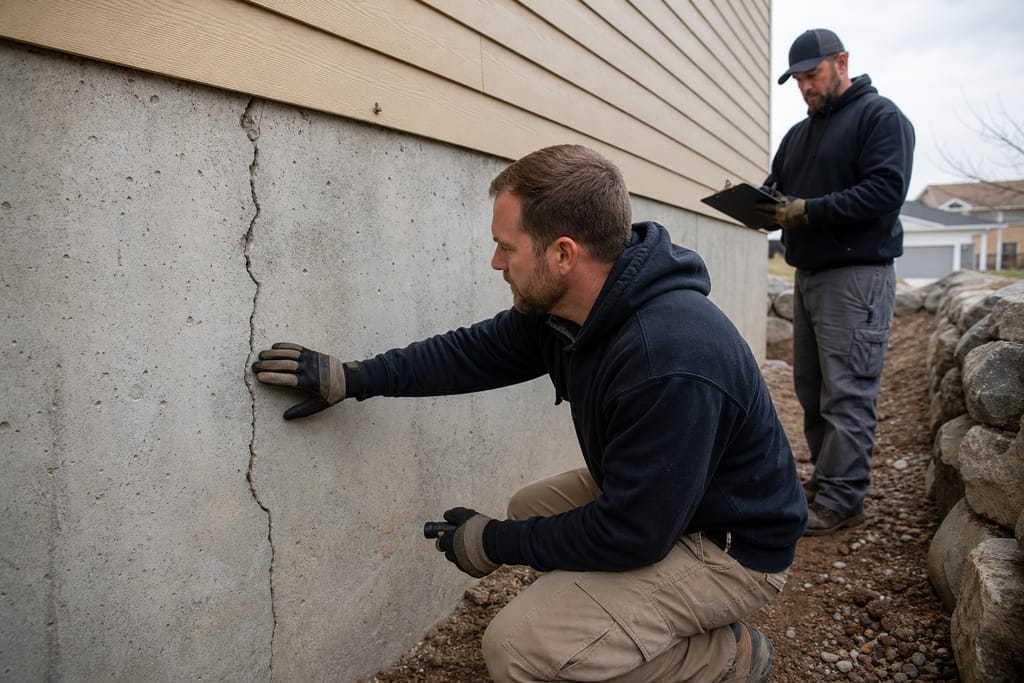
Wall Inspection
Walls are examined for bowing, cracking, or leaning indicators.
 Step 2
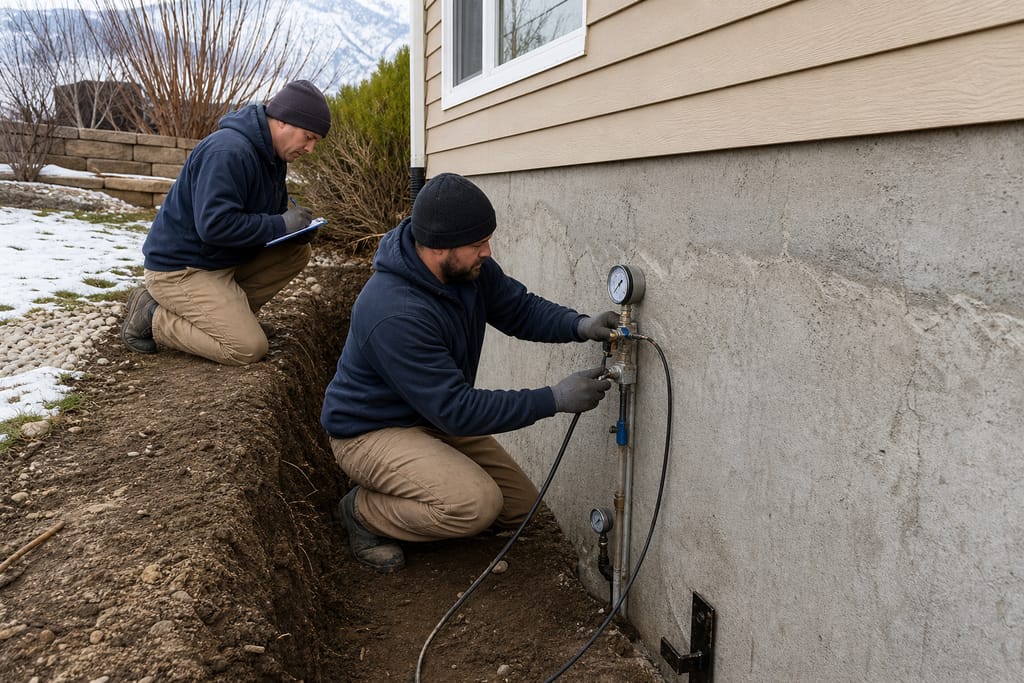
Pressure Assessment
Soil and hydrostatic pressure contributing to wall movement are evaluated.
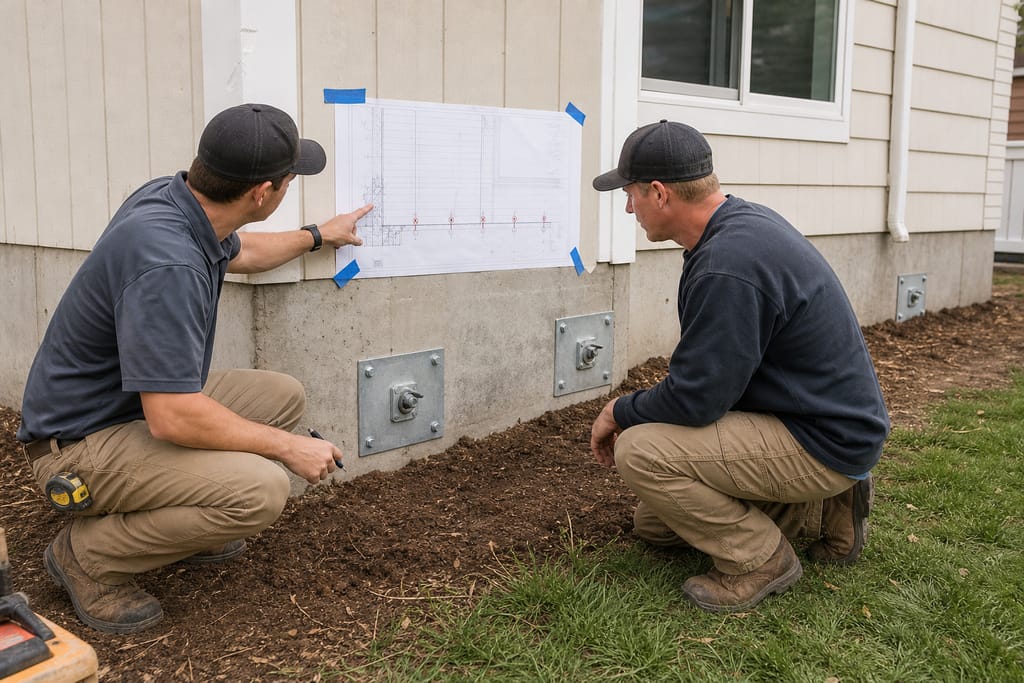 Step 3
Reinforcement Planning
A stabilization method is selected based on wall condition and severity.
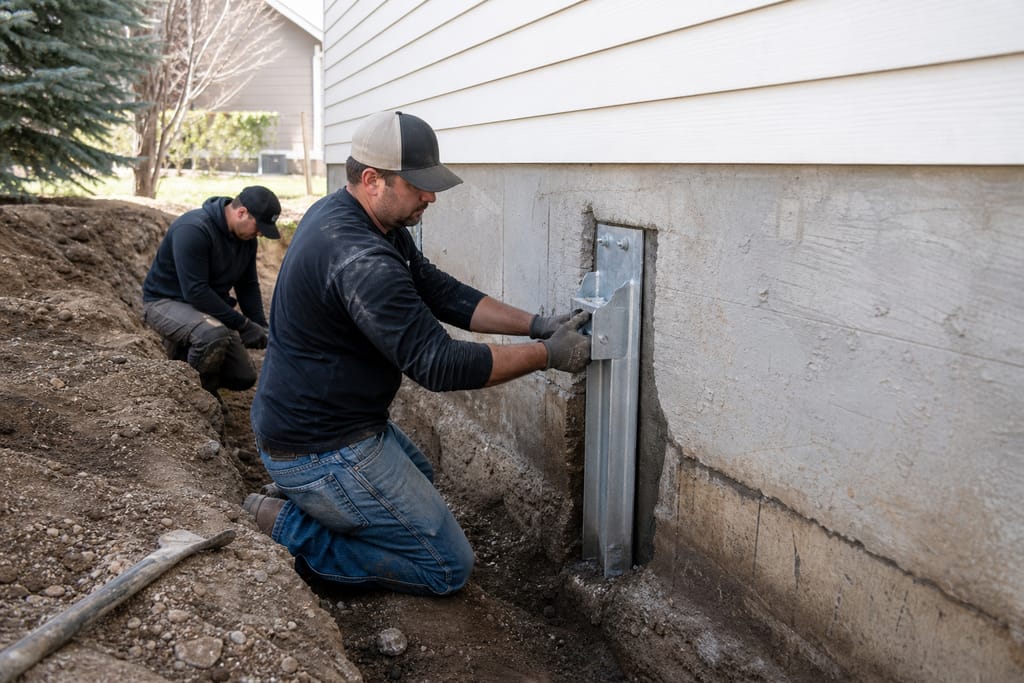 Step 4
Anchor or Brace Installation
Support systems are installed to halt further wall movement.
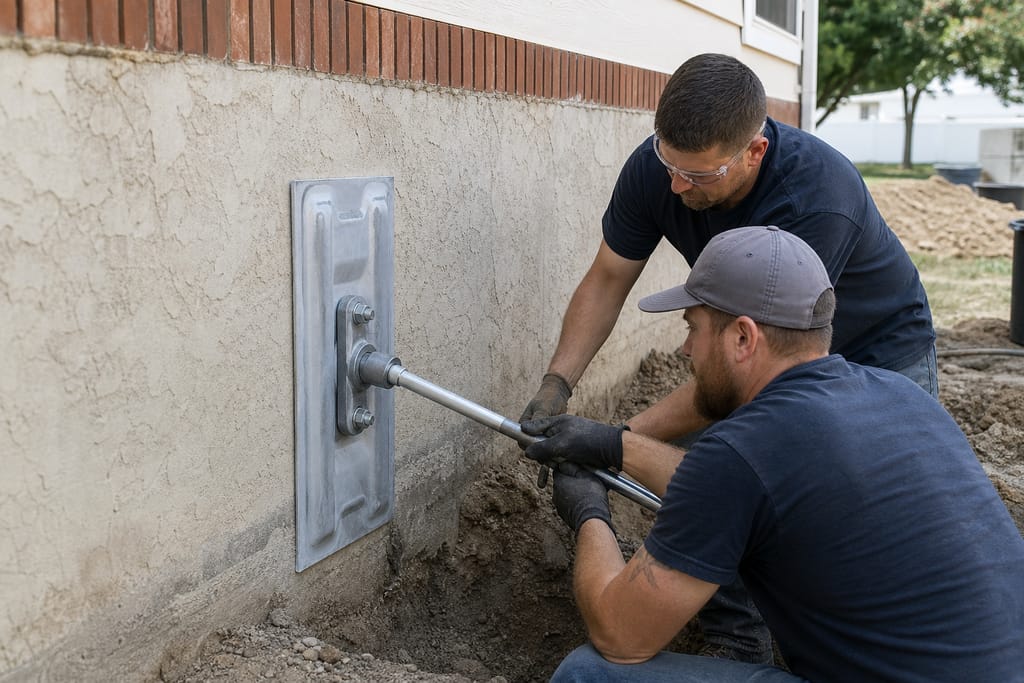 Step 5
Tensioning Adjustment
Anchors or braces are tightened to gradually stabilize the wall.
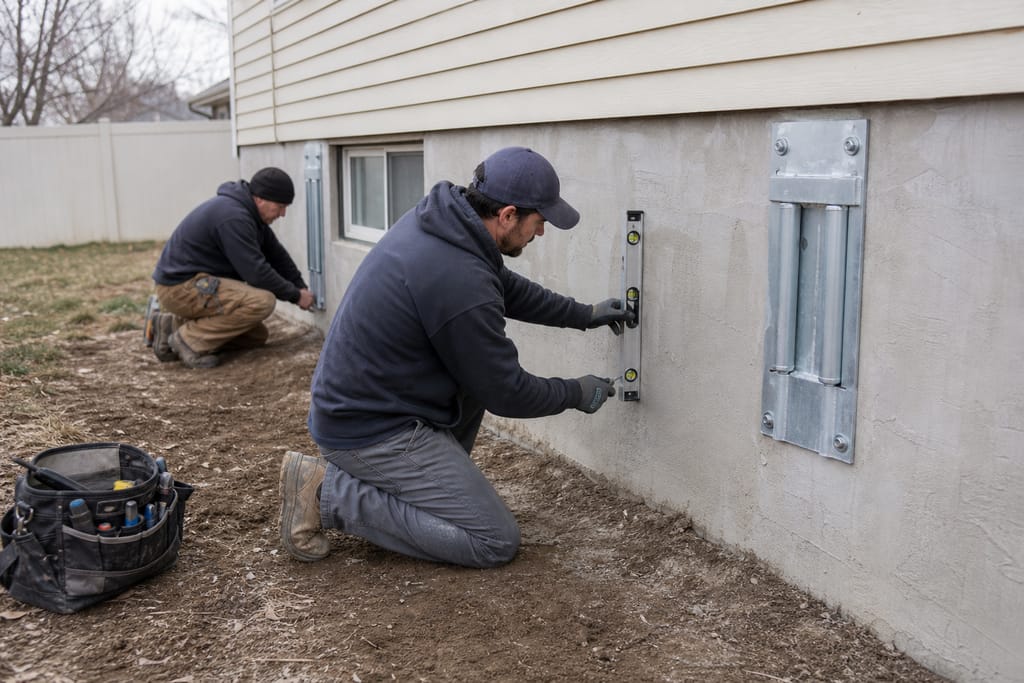 Step 6
Final Inspection
The wall is rechecked to confirm stability and proper installation.
Materials
Materials and Methods for Wall Stabilization
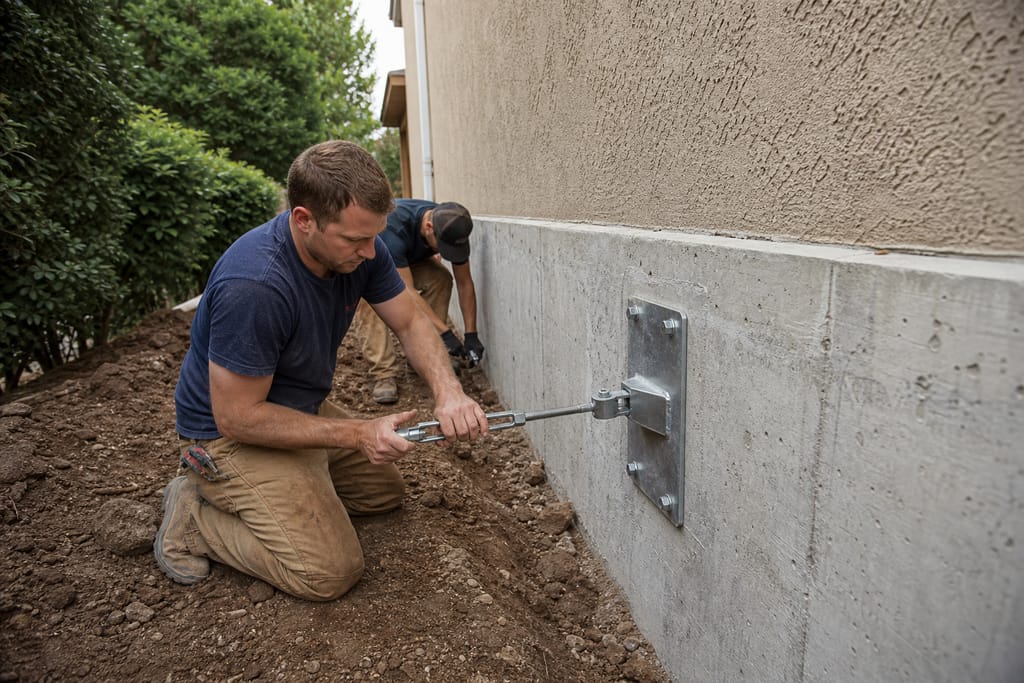
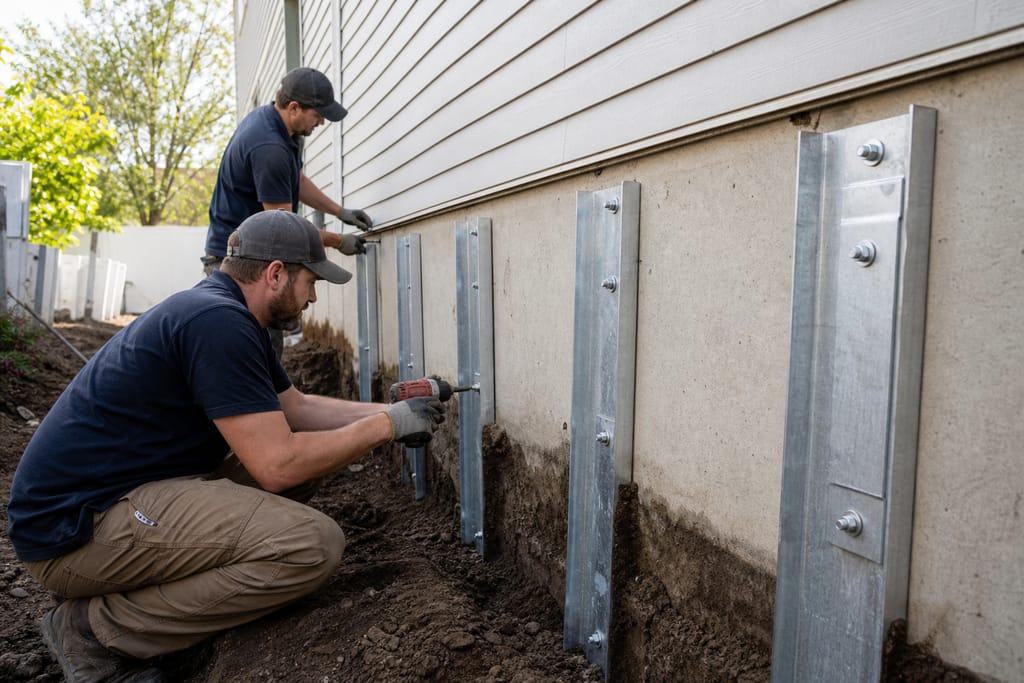
Wall Anchors
Set out in the yard to pull a bowing wall back against the pressure building from saturated clay soil after snowmelt.
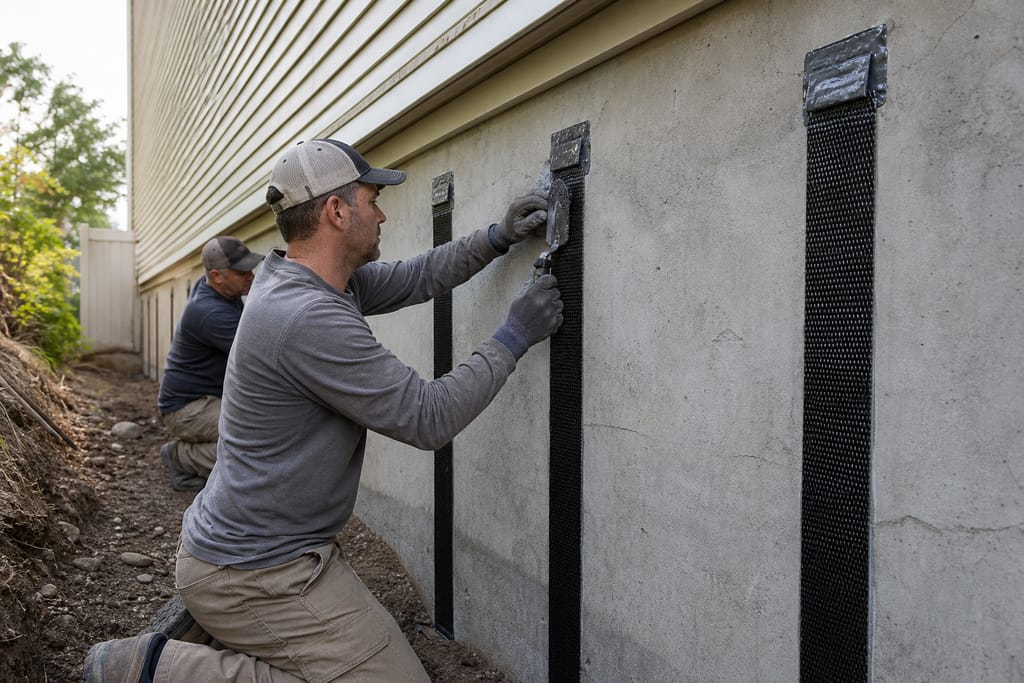
Carbon Fiber Straps
Bonded directly to the wall surface, a lower-disruption option for early bowing that doesn't require digging in the yard.
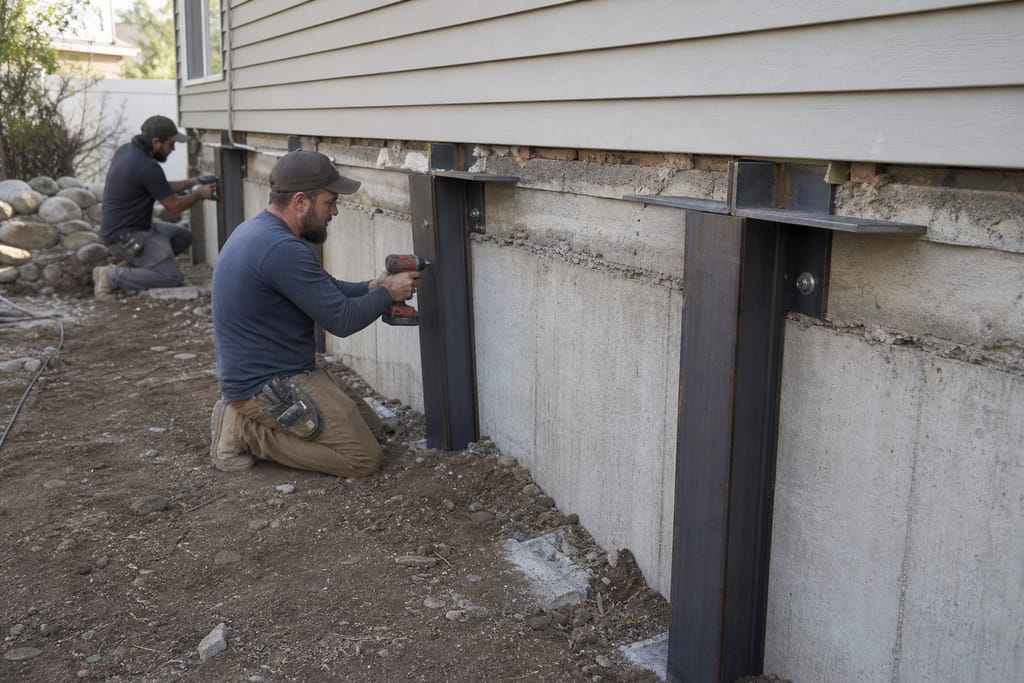
Steel I-Beams
Bolted floor-to-ceiling against walls with more advanced movement, common on older Clinton basements that have seen several wet seasons.
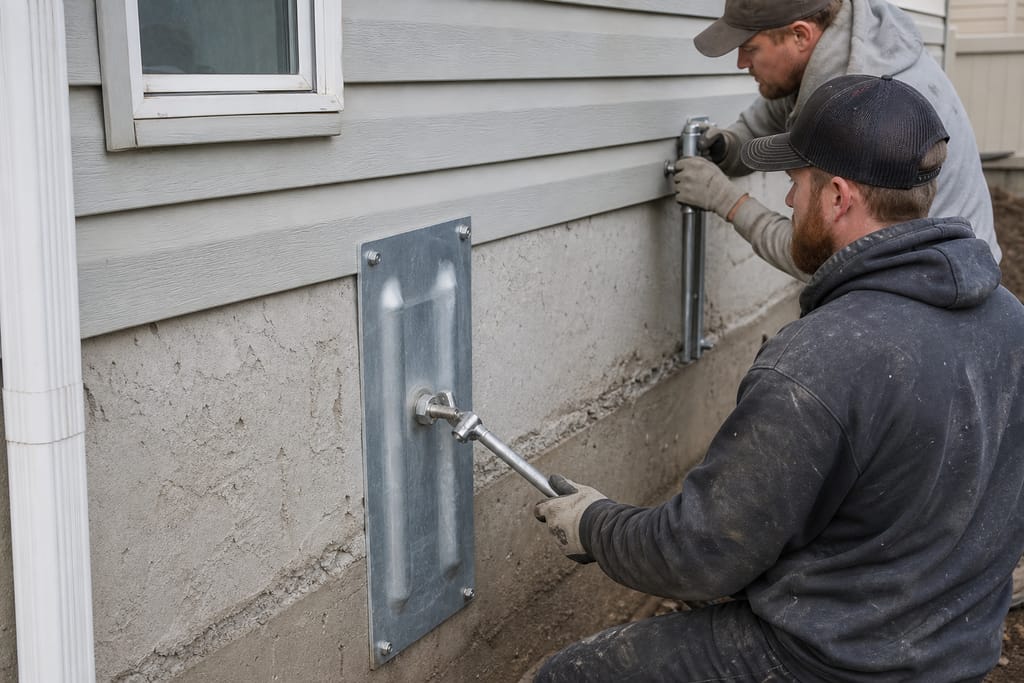
Wall Plates
Spread anchor tension evenly across the wall face so force doesn't concentrate at a single point and crack the concrete further.
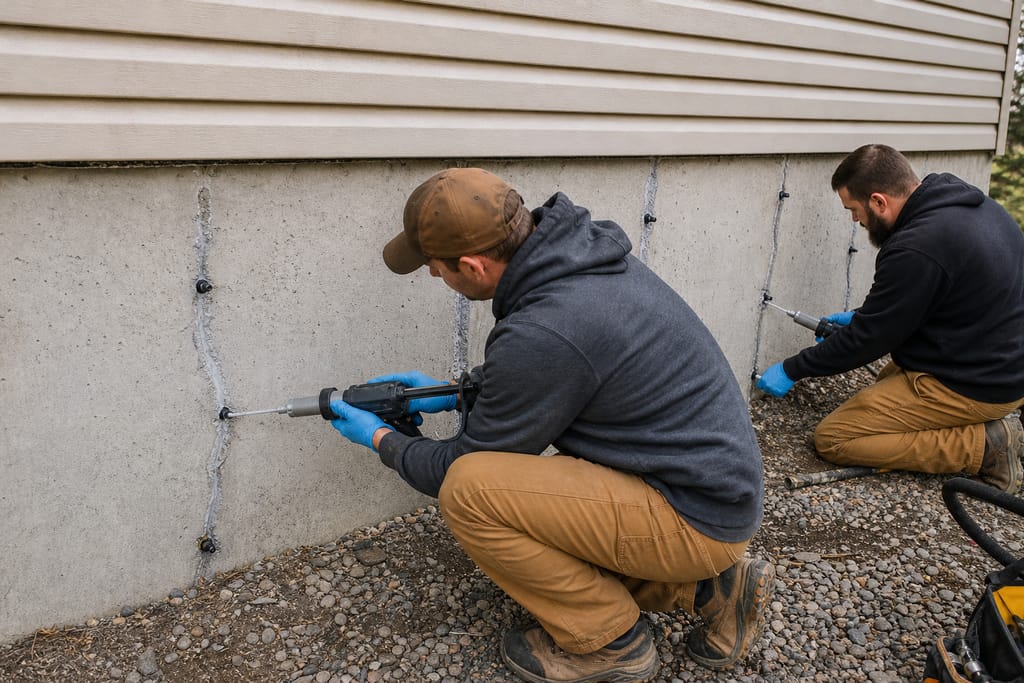
Epoxy Crack Filler
Closes existing cracks before reinforcement goes on, so the wall isn't being braced around an open gap.
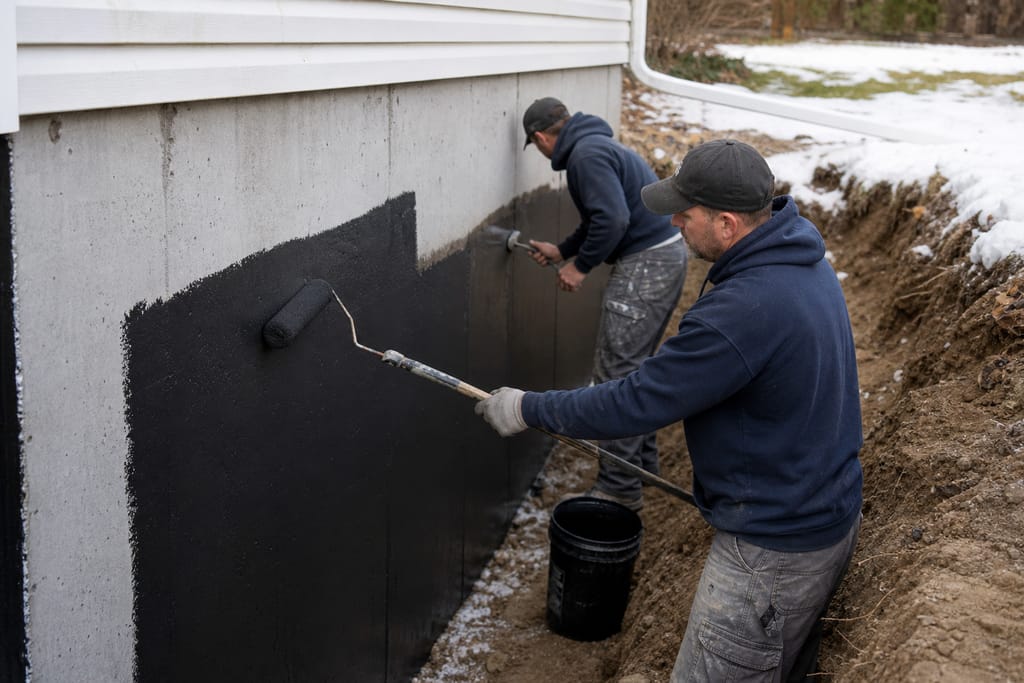
Moisture Barrier Coating
Applied after stabilization to cut down on the seepage that often accompanies bowing walls in full-basement homes.
Questions on materials?
Get a Free EstimateTimeline
How Long Does a Wall Stabilization Take?
Most wall stabilization jobs wrap up in a single visit, with anchor tensioning sometimes needing a short follow-up.
- 01
Inspection and measurement
same day - 02
Reinforcement installation
1 day - 03
Initial tensioning
same day - 04
Follow-up tension check
30–60 dayswithin
Need a schedule that fits?
Get a Free EstimateBefore & after
Before and After Wall Stabilization
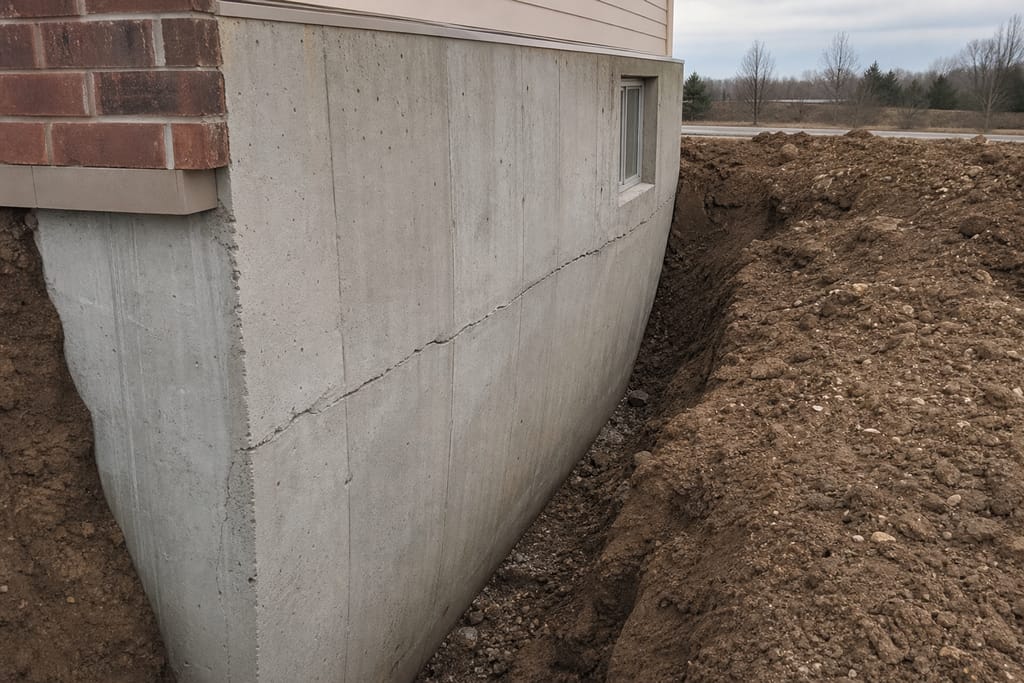
Before 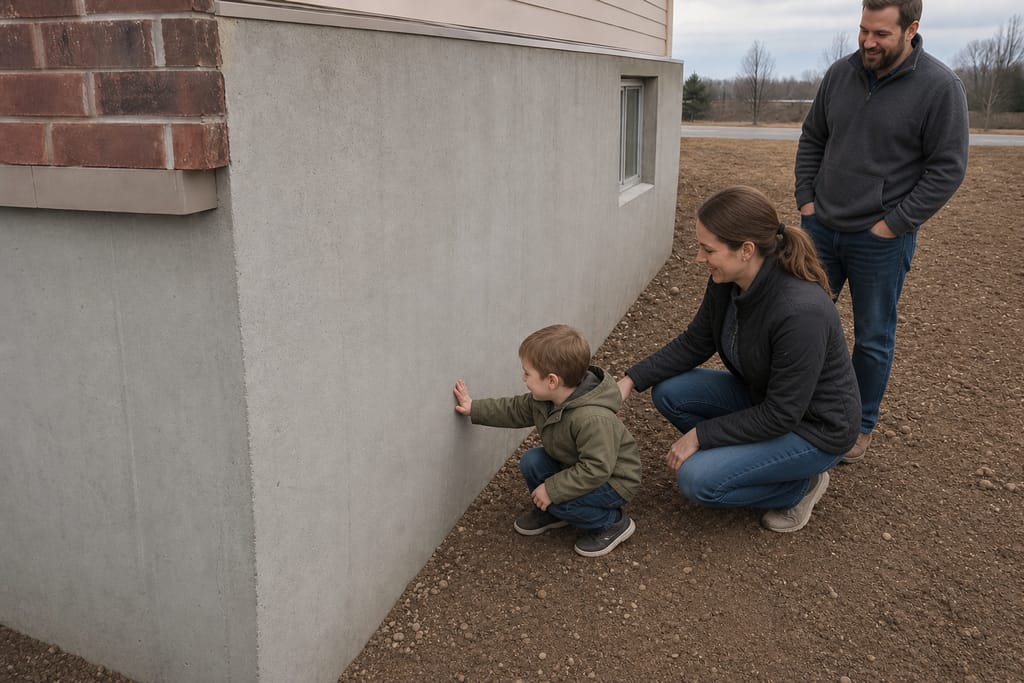
After
FAQs
Wall Stabilization FAQs
What causes bowing basement walls after winter melt?
Snowmelt saturates the clay soil around the foundation, and that waterlogged soil expands and pushes against the basement wall with far more force than dry soil does, which is what causes the visible bow.
Will a bowing wall get worse if I wait a season?
Yes. Each wet season adds more pressure cycles against a wall that's already weakened, so a bow that seems minor now tends to progress rather than stay the same.
How much does wall stabilization cost in Clinton?
Cost depends on wall length and bow severity, but anchor or carbon fiber jobs typically run in the low-to-mid thousands, with steel bracing costing more for walls with greater movement.
Is carbon fiber reinforcement as strong as steel anchors?
Carbon fiber works well for early-stage bowing where the wall hasn't moved much, but anchors or steel bracing are the better call once movement is more advanced, since they can actively pull the wall back.
Do I need a permit for wall stabilization?
Structural bracing and anchor installation usually require a permit through Davis or Weber County. Cosmetic crack filling alone typically doesn't.
Can I fix a bowing wall myself?
Sealing a surface crack is something a homeowner can handle, but anchoring or bracing a wall under active soil pressure requires engineered spacing and tensioning that isn't a DIY project.
Next step
Get a Wall Stabilization Estimate in Clinton
Call (435) 681-4655 for a free wall assessment. We'll measure the bow, explain what's driving it, and give you options before anything gets installed.
More services
Other Foundation Repair services
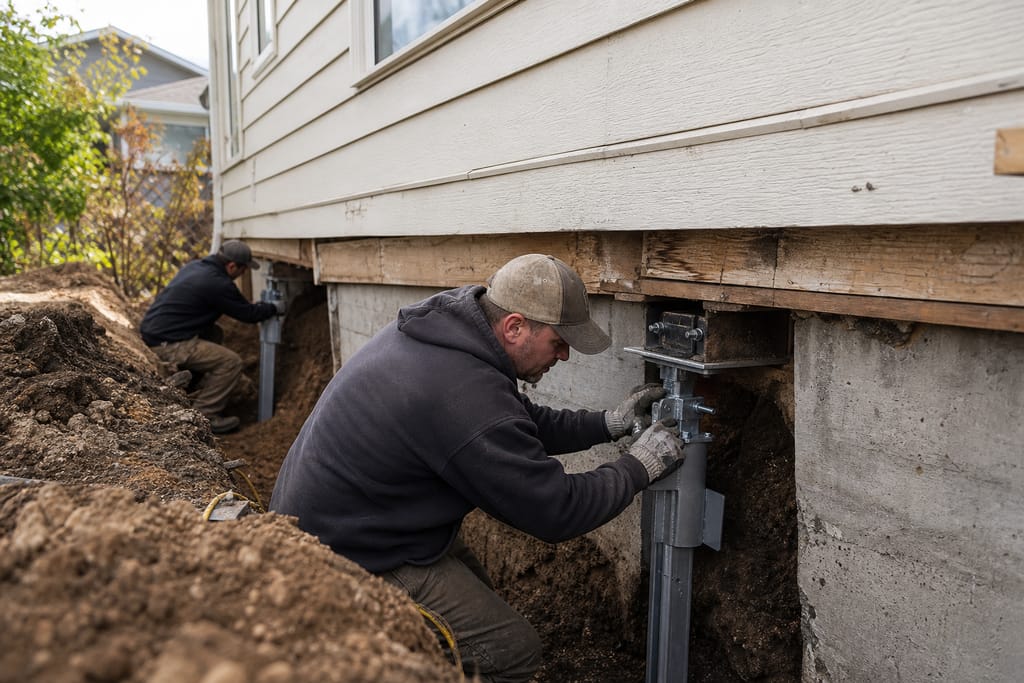
Foundation Repair
Foundation repair in Clinton with piering, crack injection, and wall stabilization. Free estimates, written scope before work starts.
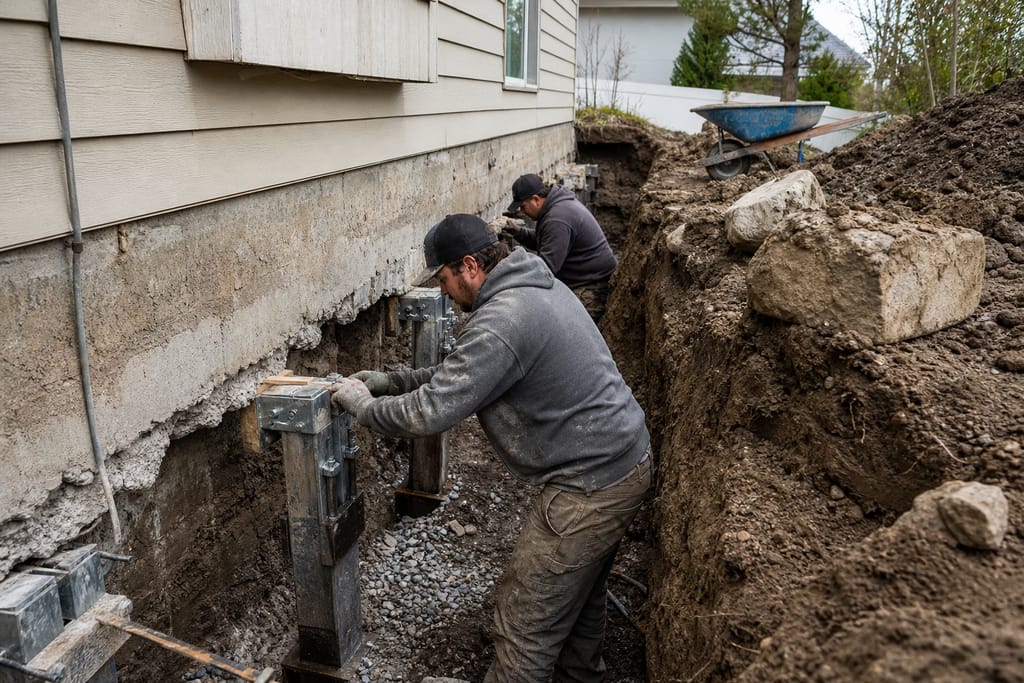
Piering and Underpinning
Piering and underpinning in Clinton, UT uses steel and helical piers to stop foundation settlement. Free estimates, straight answers on cost.
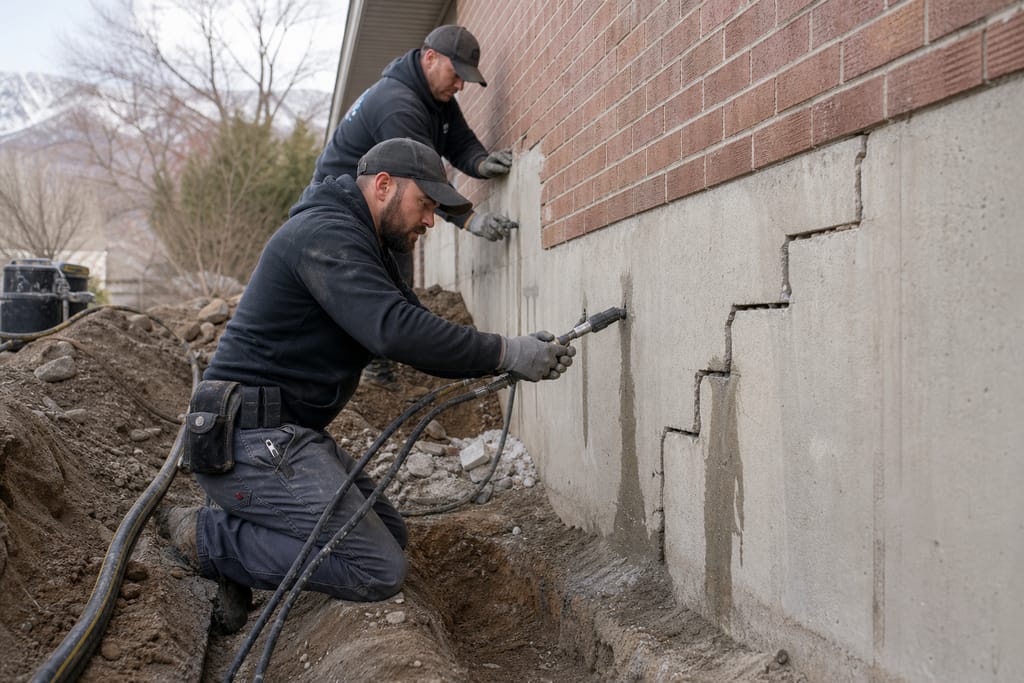
Foundation Crack Repair
Foundation crack repair in Clinton, UT seals structural and water-active cracks with epoxy or polyurethane injection. Free estimates available.
Ask about Wall Stabilization
Tell us about the project and how to reach you.